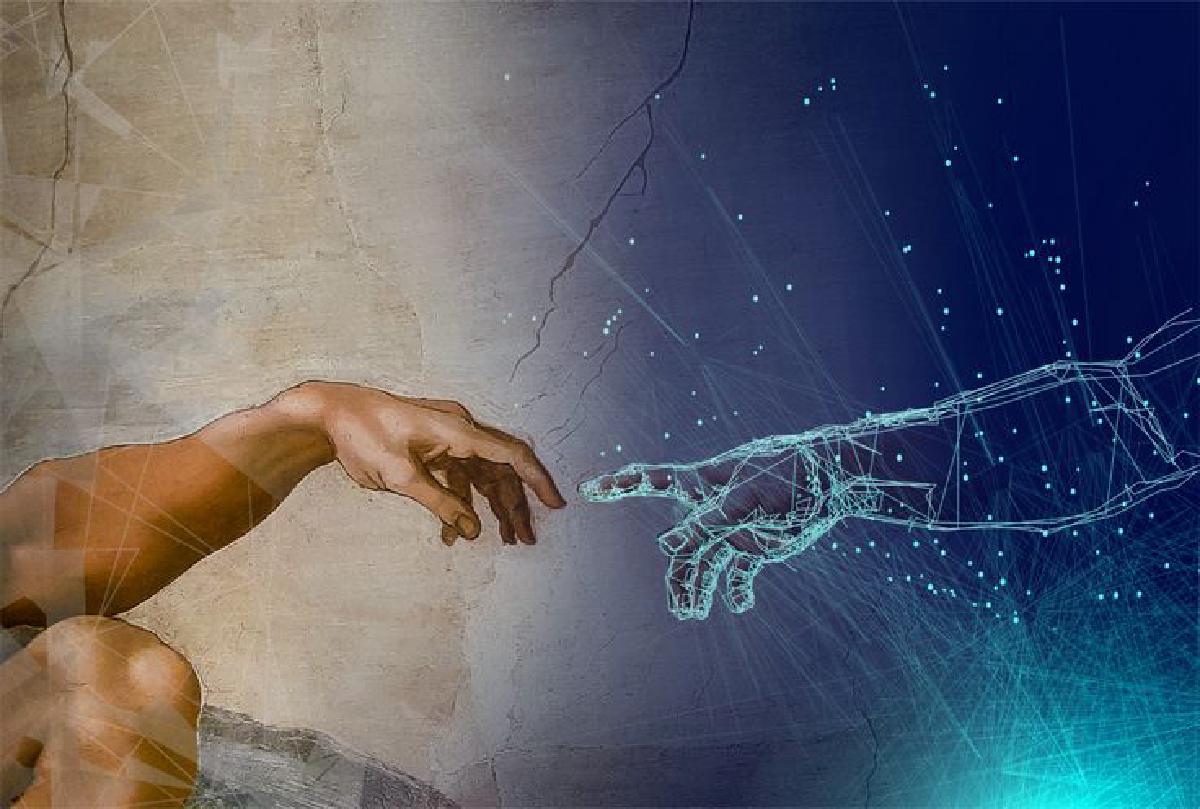

I’ve caught myself thinking the same thought all of us have had at some point: “Maybe I am just not good enough for this.”
It feels convincing in the moment. The problem seems impossible. Everyone else appears to have understood it. You don’t.
But then I realized something fascinating. For thousands of years, we humans have been solving problems. We have solved problems that were so hard they seemed impossible. And yet, we solved them.
Humans didn’t become the apex of the food chain by being the strongest, or the fastest, or the most agile. We became the apex of the food chain because we are problem solvers. We are the peak of evolution because we are the best problem solvers. We have been solving problems for thousands of years, and we will continue to do so for thousands more.
Not just our ancestors, but you and I. We are problem solvers. Think about your own life. You learned to walk and talk. You learned to make sense of symbols that once looked meaningless. A machine can do things much more efficiently than us, but what it can never replicate is the human mind. The human mind is still the strangest thing we know of, and every one of us is walking around with one.
What the machines are doing#
I use these tools every day, and I would be a hypocrite if I wrote this as an attack on them. They are useful. They are getting better.
But it is worth being clear about what they are made of. A model is a compression of everything we have already written down. When it answers me, it is rearranging things that people worked out first, sometimes over centuries. It can move around inside that space very fast. It has never had to stand at the edge of it.
Somebody had to look up at the sky before there was any such thing as astronomy, and stay confused for years with no promise that the confusion was going anywhere. That is slow, it is uncomfortable, and it doesn’t look like progress while it is happening. It is also the only way anything genuinely new has ever turned up.
So when a machine answers in two seconds what took me a week, I try to remember what the week was for. The confusion, the mistakes, the dead ends: that was the real learning. The machine can give me the answer, but it cannot give me the experience of getting there.
What worries me#
It isn’t that machines will out-think us. It’s that we are quietly giving up the habit of thinking for ourselves, outsourcing our thinking to machines.
Think about how much effort went into the app you last opened without deciding to open it. Millions of dollars of psychology research. Rooms full of people whose whole job is to win one more second of your attention. Endless testing of what goes in front of you next, and how long it should run before the thing after it starts. None of that is an accident of design. That is the product.
It works on me. I have opened an app, closed it, and opened it again inside the same minute without knowing what I was looking for. That is not a personal failure of discipline. It was engineered, by people who understand my reward system considerably better than I do.
A mind that gets interrupted every few minutes never reaches the interesting part. Every hard thing I have ever worked out needed a long, dull stretch where nothing was happening and I had to sit inside not knowing. That stretch runs on attention. And we are spending our attention in small pieces, all day, on things built to reward us for spending it.
You don’t need a conspiracy theory here. Nobody sat down and decided they wanted a distracted public. Somebody decided to keep you on the app thirty seconds longer, because that is what the business gets paid for, and the rest followed on its own. A distracted person is a better customer. A distracted person is also easier to govern, easier to sell a story to, slower to ask why. Not because anyone chose that, but because it is what falls out when enough companies are all pulling in the same direction. That is what makes it hard to fight. There is nobody to argue with.
We should not hand it over#
We are the same species that measured the Earth with a stick and a shadow. Losing our attention to a feed would be an embarrassing way to go.
I don’t think the answer is to throw your phone in a river and move to the hills (although that does sound nice). That is mostly a fantasy about escaping, and it’s its own way of not paying attention.
What has worked for me is much smaller. Catching the reach for the phone before my hand gets there. Reading something long enough that it starts to get difficult. Staying with a problem after it stops being fun. Being bored on purpose once in a while, just to see what my head does when nothing is being handed to it.
None of that makes anyone special. It just gives you back the thing you already had.
Being mindful again#
Humanity has been the best and the worst thing that ever happened to this planet. We made art that still moves people centuries later, yet we burned the forests that we needed. We cured diseases that used to kill children by the thousand, and we built the weapons that could finish us off. All of it came out of the same equipment: a mind that can hold a problem and keep turning it over.
Which is why I keep coming back to the word mindful, in the plain sense of knowing what you’re doing while you’re doing it, not the version that comes with a subscription.
There are a lot of problems left that need us, and most of them are not the kind a model can pattern-match its way through. Somebody has to sit with a friend who is coming apart. Somebody has to notice the person in the room that nobody is talking to, and be willing to be inconvenient about things that are wrong.
What’s the point of having all this intelligence if we aren’t empathetic enough? Empathy is harder than intelligence, and it’s the skill that decides what we do with all the cleverness.
So this is a reminder to me as much as to you. You are probably not too dumb for the problem in front of you. You come from a very long line of people who felt exactly the same way and solved it anyway.
There is work to do, and it needs your attention. Try not to give all of it away.
All of humanity’s problems stem from man’s inability to sit quietly in a room alone.